I'm delighted to announce that my new book, Interpretation in Jungian Analysis, is now in print and available from Routledge at 20% discount and with free shipping. It will also be available from Amazon no later than Aug. 8th. My thanks to those who have already pre-ordered. Click Here
This volume is the first of its kind in the literature of analytical psychology. Until now, the process of interpretation has been addressed only briefly in general Jungian texts. Interpretation in Jungian Analysis provides an in-depth exploration of the process, including the history of analytic technique, the role of language in analytic therapy, the poetics and metaphor of interpretation, and the relationship between interpretation and the analytic attitude. In addition, the steps involved with the creation of clear, meaningful, and transformative interpretations are plainly outlined. Throughout the book, clinical examples and reader exercises are provided to deepen the learning experience. The influence of the Jungian perspective on the interpretative process is outlined, as are the use of analytic reverie and confrontation during the analytic process.
The Psychoanalytic Muse is devoted to the appreciation of the language and literature of Psychoanalysis and Analytical Psychology. The beauty and elegance of the ideas associated with the various schools of depth psychology underscore the common foundations of our process. Excerpts of analytic thought from diverse theoretical orientations will be updated twice weekly, so please visit often.
Thursday, July 26, 2018
Wednesday, July 4, 2018
Mark Winborn Featured on Speaking of Jung Podcast
Speaking of Jung Podcast - Posted on July 2, 2018 (Click Here to Listen)
This is Dr. Winborn's second interview on the Speaking of Jung Podcast hosted by Laura London. The focus is on his forthcoming (Routledge, Aug. 8, 2018) book Interpretation in Jungian Analysis: Art and Technique.
Analytic interpretation is fundamental to the process of psychoanalysis, Jungian analysis, and psychoanalytic psychotherapy. Interpretation is the medium by which the psychoanalytic art form is transmitted. What one chooses to say in analysis, why one chooses it, how one says it, when one says it; these are the building blocks of the interpretive process and the focus of Interpretation in Jungian Analysis: Art and Technique.
This volume is the first of its kind in the literature of analytical psychology. Until now, the process of interpretation has been addressed only briefly in general Jungian texts. Interpretation in Jungian Analysis provides an in-depth exploration of the process, including the history of analytic technique, the role of language in analytic therapy, the poetics and metaphor of interpretation, and the relationship between interpretation and the analytic attitude. In addition, the steps involved with the creation of clear, meaningful, and transformative interpretations are plainly outlined. Throughout the book, clinical examples and reader exercises are provided to deepen the learning experience. The influence of the Jungian perspective on the interpretative process is outlined, as are the use of analytic reverie and confrontation during the analytic process.
In addition to the historical, technical, and theoretic aspects of interpretation, this book also focuses on the artistic and creative elements that are often overlooked in the interpretive process. Ultimately, cultivating fluidity within the interpretive process is essential to engaging the depth and complexity of the psyche. Interpretation in Jungian Analysis will be of great interest to psychoanalysts and psychotherapists of all theoretical orientations and will be essential reading for students of analytical psychology.
He received a Bachelor of Science in psychology from Michigan State University in 1982, a Master of Science and Ph.D. in clinical psychology from the University of Memphis in 1987, and a certificate in Jungian Analysis from the Inter-Regional Society of Jungian Analysts in 1999.
Dr. Winborn served for three years as the staff psychologist for the United States Military Academy in West Point, New York and is now a training and supervising analyst at the C.G. Jung Institute Zürich and for the Inter-Regional Society of Jungian Analysts in North America. He currently serves on the American Board for Accreditation in Psychoanalysis, and the Ethics Committee of the International Association for Analytical Psychology. Dr. Winborn is on the editorial boards of the Journal of Analytical Psychology and the Journal of Humanistic Psychology, and is a member of the National Association for the Advancement of Psychoanalysis.
He has presented papers at the past three Congresses of the International Association for Analytical Psychology (Montreal 2010, Copenhagen 2013, Kyoto 2016), and will present again at the Vienna Congress in 2019. Since 1990 he has maintained a private practice in Memphis, Tennessee where he was the Training Coordinator for the Memphis Jungian Seminar from 2010 - 2016. In addition to his teaching activities in Memphis and Zürich, he has been an invited presenter for Jungian societies, training seminars, and institutes throughout the United States, as well as in Russia and the Dominican Republic.
He is the author of Deep Blues: Human Soundscapes for the Archetypal Journey, published in 2011, and is the editor of the book, Shared Realities: Participation Mystique & Beyond, published in 2014. His new book, Interpretation in Jungian Analysis: Art & Technique, will be released on August 8th of this year, and is the subject of our talk today.
This interview was recorded on Sunday, July 1, 2018. It's 57:51 long and 25 MB. You can listen to it right here in your browser or download it directly to your computer. This episode is also available on iTunes, Stitcher, Google Play, or wherever you get your shows.
Thursday, June 28, 2018
Interpretation in Jungian Analysis - Available August 8th - Early Praise
Interpretation in Jungian Analysis:
Art and Technique
Mark Winborn
“This work is destined to become one of the basic texts for training contemporary Jungian psychoanalysts." - Murray Stein, PhD, former President of the International Association for Analytical Psychology
"This comprehensive exploration of mainstream Jungian and Freudian perspectives on the place of interpretation in the therapeutic process offers readers of all analytic schools and levels of experience a comprehensive explication of the transformational role of interpretation in analytic therapy." - Howard Levine, MD, faculty for the Massachusetts Institute for Psychoanalysis and the Psychoanalytic Institute of New England
“It is no dry study, but a generous, rich, robust, and immensely practical book, taking us to the improvisational heart of the interpretive moment. It will serve as an essential resource for many years to come." - Marcus West, UK Editor-in-Chief of the Journal of Analytical Psychology
"This is a landmark contribution to the field of analytical psychology. It will be invaluable to Jungian trainees across the world while offering valuable clarification and refreshment to even the most experienced clinicians." - Warren Colman, former UK Editor-in-Chief of the Journal of Analytical Psychology
Analytic interpretation is fundamental to the process of psychoanalysis, Jungian analysis, and psychoanalytic psychotherapy. Interpretation is the medium by which the psychoanalytic art form is transmitted. What one chooses to say in analysis, why one chooses it, how one says it, when one says it; these are the building blocks of the interpretive process and the focus of Interpretation in Jungian Analysis: Art and Technique.
This volume is the first of its kind in the literature of analytical psychology. Until now, the process of interpretation has been addressed only briefly in general Jungian texts. Interpretation in Jungian Analysis provides an in-depth exploration of the process, including the history of analytic technique, the role of language in analytic therapy, the poetics and metaphor of interpretation, and the relationship between interpretation and the analytic attitude. In addition, the steps involved with the creation of clear, meaningful, and transformative interpretations are plainly outlined. Throughout the book, clinical examples and reader exercises are provided to deepen the learning experience. The influence of the Jungian perspective on the interpretative process is outlined, as are the use of analytic reverie and confrontation during the analytic process.
In addition to the historical, technical, and theoretic aspects of interpretation, this book also focuses on the artistic and creative elements that are often overlooked in the interpretive process. Ultimately, cultivating fluidity within the interpretive process is essential to engaging the depth and complexity of the psyche. Interpretation in Jungian Analysis will be of great interest to psychoanalysts and psychotherapists of all theoretical orientations and will be essential reading for students of analytical psychology.
20% Discount Available - enter the code FLR40 at checkout
Hardback: 978-1-138-05808-8 | $112.00
Paperback: 978-1-138-05811-8 | $30.36
For more information visit: www.routledge.com/9781138058118
Sunday, April 15, 2018
A New Interview with Mark Winborn by Stefano Carpani
A new interview with Mark Winborn, Jungian psychoanalyst, by Stefano Carpani in the library of the C.G. Jung Institute in Zurich, Switzerland. The interview took place February 2018. It covers the publication of Dr. Winborn's new book Interpretation in Jungian Analysis, what becoming a psychoanalyst means, the nature of the analytic process, comparative psychoanalysis, and cultivating the analytic attitude.YouTube Link
Thursday, March 8, 2018
Interpretation in Jungian Analysis: Art and Technique

Pre-publication announcement (arriving July 2018, Routledge) "Interpretation in Jungian Analysis: Art and Technique" by Mark Winborn. This volume is the first of its kind in the literature of analytical psychology. Until now, the process of interpretation has been addressed only briefly in general Jungian texts. Interpretation in Jungian Analysis provides an in-depth exploration of the process, including the history of analytic technique, the role of language in analytic therapy, the poetics and metaphor of interpretation, and the relationship between interpretation and the analytic attitude. In addition, the steps involved with the creation of clear, meaningful, and transformative interpretations are plainly outlined.
Analytic interpretation is fundamental to the process of psychoanalysis, Jungian analysis, and psychoanalytic psychotherapy. Interpretation is the medium by which the psychoanalytic art form is transmitted. What one chooses to say in analysis, why one chooses it, how one says it, when one says it; these are the building blocks of the interpretive process and the focus of Interpretation in Jungian Analysis: Art and Technique.
In addition to the historical, technical, and theoretic aspects of interpretation, this book also focuses on the artistic and creative elements that are often overlooked in the interpretive process. Ultimately, cultivating fluidity within the interpretive process is essential to engaging the depth and complexity of the psyche. Interpretation in Jungian Analysis will be of great interest to psychoanalysts and psychotherapists of all theoretical orientations and will be essential reading for students of analytical psychology.
Saturday, February 10, 2018
Mark Winborn teaching Feb 12-18 C.G. Jung Institute Zurich
Saturday, January 13, 2018
Mark Winborn presenting 5 week seminar "The Fundamentals of Technique in Analytic Therapy" to Moscow Assoc. for Analytical Psychology
The Psychoanalytic Muse editor, Mark Winborn, is honored to be invited to teach a 5 week - 16 hour webinar on "The Fundamentals of Technique in Analytic Therapy" for the Moscow Association for Analytical Psychology. Beginning Jan 13th - the seminar covers the history of technique, the analytic attitude, the structure of analytic therapy, roles in analysis, analytic interpretation, beginning an analysis, defenses, resistance, transference/countertransference analysis, unconscious communication, and termination. http://www.maap.pro/
Sunday, September 10, 2017
Re-Encountering Jung: Analytical psychology and contemporary psychoanalysis
Available Now Click on this to Order from Routledge
Psychoanalytic Muse editor Mark Winborn contributes a chapter Bion and Jung: Intersecting Vertices.
Since the split between Freud and Jung, psychoanalysis and analytical psychology have largely developed in an atmosphere of mutual disregard. Only in recent years have both discourses shown signs of an increasing willingness to engage. Re-Encountering Jung: Analytical Psychology and Contemporary Psychoanalysis is the first edited collection of papers devoted to a reconciliation between these two fields. The contributors explore how Jungian thinking influences, challenges, and is challenged by recent developments in the psychoanalytic mainstream. In examining the nature of the split, figures from both sides of the conversation seek to establish lines of contrast and commonality so as to reflect an underlying belief in the value of reciprocal engagement.
Each of the chapters in this collection engages the relationship between Jungian and psychoanalytic thinking with the intention of showing how both lines of discourse might have something to gain from attending more to the voice of the other. While several of the contributing authors offer new perceptions on historical concerns, the main thrust of the collection is in exploring contemporary debates.
Re-Encountering Jung reflects a unique undertaking to address one of the longest-standing and most significant rifts in the history of depth psychology. It will be of great interest to all academics, students and practitioners within the fields of analytical psychology and psychoanalysis.
Thursday, August 31, 2017
Mark Winborn presenting at Centro Jung Santo Domingo Sept 1-3, 2017
MAJS faculty member Mark Winborn is presenting at the Centro Jung Study Center over three days, September 1st - 4th, Santo Domingo, Dominican Republic - "Deep Blues: Human Soundscapes for the Archetypal Journey", "Fundamentals of Technique in Analytic Therapy," and "Shared Realities: Participation Mystique and Beyond" as well as a group clinical supervision.
Thursday, August 24, 2017
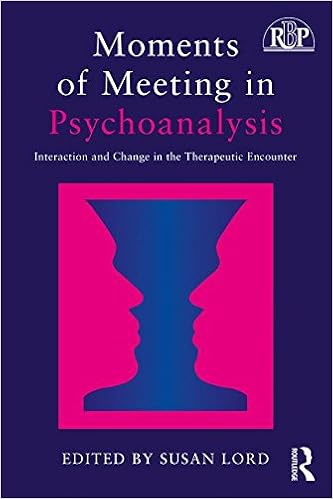
Moments of Meeting in Psychoanalysis - Book Publication
Announcing the publication of "Moments of Meeting in Psychoanalysis: Interaction and Change in the Therapeutic Encounter" edited by Susan Lord and published by Routledge. Psychoanalytic Muse Editor Mark Winborn contributes a chapter titled "The Aesthetics of Being." The other contributors include a wide range of psychoanalysts, Jungian analysts, and psychoanalytic psychotherapists. Order at Amazon

There are moments of connection between analysts and patients during any therapeutic encounter upon which the therapy can turn. Moments of Meeting in Psychoanalysis explores how analysts and therapists can experience these moments of meeting; shows how this interaction can become an enlivening and creative process; and seeks to recognise how it can change both the analyst and patient in profound and fundamental ways.
The theory and practice of contemporary psychoanalysis and psychoanalytic psychotherapy has reached an exciting new moment of generous and generative interaction. As psychoanalysts become more intersubjective and relational in their work, it becomes increasingly critical that they develop approaches that have the capacity to harness and understand powerful moments of meeting, capable of propelling change through the therapeutic relationship. Often these are surprising human moments in which both client and clinician are moved and transformed. Moments of Meeting in Psychoanalysis offers a window into the ways in which some of today’s practitioners think about, encourage, and work with these moments of meeting in their practices. Each chapter of the book offers theoretical material, case examples, and a discussion of various therapists’ reflections on and experiences with these moments of meeting.
With contributions from relational psychoanalysts, psychotherapists and Jungian analysts, and covering essential topics such as shame, impasse, mindfulness, and group work, this book provides new theoretical thinking and practical clinical guidance on how best to work with moments of meeting in any relationally oriented therapeutic practice. Moments of Meeting in Psychoanalysis will be of great interest to psychoanalysts, psychoanalytic psychotherapists, psychologists, social workers, workers in other mental health fields, graduate students, and anyone interested in change processes.
Sunday, June 4, 2017
Forthcoming Teaching and Speaking Schedule June 2017- April 2018 for Mark Winborn, PhD, NCPsyA
June 11, 2017: Moscow
Association for Analytical Psychology, Moscow, Russia
Sept 1-3, 2017: Centro
Jung, Santo Domingo, Dominican Republic
Sept 23-24, 2017: Memphis-Atlanta
Jungian Seminar, Memphis, Tennessee
Oct 14-15, 2017: Minneapolis
Jung Association, Minneapolis, Minnesota
Nov 3-5, 2017: Case Colloquia, Philadelphia
Assoc. of Jungian Analysts, Philadelphia, Pennsylvania
Nov 17, 2017: American Board for Accreditation
in Psychoanalysis, New York, New York
Dec 1-2, 2017: Jung Association of Central
Ohio, Columbus, Ohio
Jan 26-28, 2018: Case Colloquia, Philadelphia
Assoc. of Jungian Analysts, Philadelphia, Pennsylvania
Feb 11-18, 2018: C.G. Jung Institute, Zurich/Küsnacht,
Switzerland
Mar 2-4, 2018: Case
Colloquia, Philadelphia Assoc. of Jungian Analysts, Philadelphia, Pennsylvania
Apr 16-17, 2018: Case
Colloquia, Philadelphia Assoc. of Jungian Analysts, in Santa Fe, New Mexico
Thursday, May 25, 2017
Analytical Psychology and Science: Adversaries or Allies? by Mark Winborn, PhD, NCPsyA
In Psychological Perspectives, 2016, Vol. 59, #4, pp. 490-508
Conclusion:
Jung (like Freud) saw himself as a scientist and was
constantly incorporating new ideas from other fields such as linguistics,
anthropology, physics, Gnosticism, and alchemy.
In fact, Jung has been referred to as a bricoler - a French word that refers to someone who pieces things
together from a variety of sources. I
believe Jung, if he were alive today, would have embraced the recent findings
from infant observation, neurosciences, attachment research, and trauma
research just as he did with Fordham’s early forays into child analysis. I would challenge us to consider whether we
want to suspend progress in Analytical Psychology, preserving it in the “just
so” state we’ve become comfortable with.
I believe our task as Jungians is to re-evaluate, re-cast,
re-interpret Jung’s ideas in light of knowledge from other fields – just as
Jung did in developing his conceptual framework originally. But we have to be
in dialogue with other fields and have an understanding of their findings in
order for this to occur. I believe we have a responsibility to the scientific
method which shaped and informed Jung’s inquiries; a responsibility to peer
more deeply into the relationship between brain and mind and between soma and
psyche; into the psychological and neurological underpinnings of conscious and
unconscious processes; to seriously evaluate Jung's typological model in light
of current neurological and cognitive sciences; and inform our candidates about
the current theoretical debate occurring between those holding apriori
positions on the nature of archetypal experience and those who now postulate
archetypal experience as emergent
phenomena.
Ultimately, scientific empiricism
can’t study or evaluate all of the elements of Analytical Psychology. Many
elements of our field can’t be sufficiently operationally defined in a manner
that would allow study through the scientific vertex. But there are many
elements of Analytical Psychology which can be examined through a scientific
lens - a process by which we can deepen our confidence in our methods and
theories, gain a deeper understanding of why certain methods work, and
occasionally a casting off or remaking of certain theories or practices which
can’t be supported from a scientific perspective. We can’t afford to cast off
empiricism out of a preference for subjectivism if Analytical Psychology is to
survive another 100 years as something other than a well preserved museum
piece.
Many fields of scientific inquiry
have moved towards the positions advocated by Jung while at the same time
adding many new insights it wasn’t possible for Jung to imagine despite his
incredible breadth of vision. We do have Jungians among us who are engaged with
the scientific community. There are a small cadre of others trying to bring
Analytical Psychology into dialogue with contemporary science, including Mario
Jacoby, George Hogenson, Joseph Cambray, Jean Knox, Margaret Wilkinson, John
Merchant, Robert Romanyshyn, David Rosen, Christian Roesler, and John Haule.
In order for this shift to happen,
some who come from backgrounds in the arts and humanities may need to learn
something about the scientific method including research design, sample size,
types of validity and reliability, as well as some familiarity with statistical
inference. But this is not unlike my own journey - coming from a
scientist-practitioner model of clinical psychology training and needing to
become more intimately familiar with the metaphoric world of myths, fairytales,
art, poetry, literature, and religion.
I hope this paper leaves you with the impression that Analytical
Psychology and science can be and need to be allies rather than adversaries. We
need the findings from contemporary science to help us reflect on what we
experience as analytic practitioners. Science needs us to advocate for the
subjective element in the laboratory. Be we cannot fulfill Jung’s dream of a
Analytical Psychology as a mediatory science unless we are in an ongoing
dialogue with the scientific community. In closing, I leave the reader with this thought
from Carl Jung (1976, para. 1236) “Ultimate truth, if
there be such a thing, demands the concert of many voices.”
Saturday, March 18, 2017
Forthcoming 2018: Interpretation in Jungian Analysis: Art and Technique
Analytic interpretation is fundamental to the process of psychoanalysis, Jungian analysis, and psychoanalytic psychotherapy. Interpretation is a primary medium by which the psychoanalytic art form is transmitted. What one chooses to say in analysis, why one chooses that particular thing to say, how one says it, when one says it - these are some of the building blocks of the interpretive process. This volume will provide those studying Analytical Psychology with the requisite knowledge and tools to competently and creatively incorporate the technique of interpretation. More specifically, readers will learn to differentiate between interpretative and non-interpretive interventions in therapy/analysis; explore of the origins of the interpretive process within psychoanalytic and Jungian frameworks; differentiate various levels and styles of interpretation; and examine particular uses of language in interpretation. Clinical examples will be provided throughout to illustrate the clinical technique of interpretation.
Forthcoming New Chapter "The Aesthetics of Being" by Mark Winborn
Shared Realities author Mark Winborn is pleased to make a pre-publication announcement for "Moments of Meaning in Psychoanalysis: Interaction and Change in the Therapeutic Encounter" edited by Susan Lord to be released in August in the Relational Psychoanalysis series from Routledge. His chapter contribution is titled "The Aesthetics of Being." The full author listing is: Anthony Bass, Beatrice Beebe, Linda Beeler, Edie Boxer, Joseph Cambray, Catherine Crowther, Denise Davis, Patricia DeYoung, Susan Lord, Elizabeth McKamy, Ajna Pisani, David Pocock, Miki Rahmani, Martin Schmidt, Jonathan Slavin, Malcolm Slavin, Joyce Slochower, Martha Stark, Annie Weiss, Mark Winborn.
There are moments of connection between analysts and patients during any therapeutic encounter upon which the therapy can turn. Moments of Meeting in Psychoanalysis explores how analysts and therapists can experience these moments of meeting, shows how this interaction can become an enlivening and creative process, and seeks to recognise how it can change both the analyst and patient in profound and fundamental ways.
The theory and practice of contemporary psychoanalysis and psychoanalytic psychotherapy has reached an exciting new moment of generous and generative interaction. As psychoanalysts become more intersubjective and relational in their work, it becomes increasingly critical that they develop approaches that have the capacity to harness and understand powerful moments of meeting, capable of propelling change through the therapeutic relationship. Often these are surprising human moments in which both client and clinician are moved and transformed. Moments of Meeting in Psychoanalysis offers a window into the ways in which some of today’s practitioners think about, encourage, and work with these moments of meeting in their practices. Each chapter of the book offers theoretical material, case examples, and a discussion of various therapists’ reflections on and experiences with these moments of meeting.
With contributions from relational psychoanalysts, psychotherapists and Jungian analysts, and covering essential topics such as shame, impasse, mindfulness and group work, this book provides new theoretical thinking and practical clinical guidance on how best to work with moments of meeting in any relationally oriented therapeutic practice. Moments of Meeting in Psychoanalysis will be of great interest to psychoanalysts, psychoanalytic psychotherapists, psychologists, social workers, workers in other mental health fields, graduate students and anyone interested in change processes.
Pre-order is available now on Amazon.
https://www.routledge.com/Moments-of-Meeting-in-Psychoanalysis-Interaction-and-Change-in-the-Therapeutic/Lord/p/book/9781138229228
Saturday, March 4, 2017
Friday, November 27, 2015
James Grotstein on The Transcendent Position
BION'S "TRANSFORMATION IN 'O'" AND
THE CONCEPT OF THE "TRANSCENDENT POSITION"
by James S. Grotstein
(presentation downloaded from: http://www.sicap.it/merciai/bion/papers/grots.htm )
INTRODUCTION
Bion, who was to become
the awesome explorer of the "deep and formless infinite" of the
psyche, first immersed himself in the theories of Freud and Klein and then
gradually developed a revolutionary metapsychological metatheory for psychoanalysis.
Bion incurred the criticism of his colleagues by daring to investigate faith,
spirituality, religion, mysticism, metaphysics, and fetal mental life. His
concepts of transformations in L(ove), H(ate), and K(nowledge), as well as of intuitionistic and subjective science [Transformations in "O" (Ultimate Truth, Absolute
Reality)], constitute an objective and numinous psychoanalytic
epistemology.
Bion was preoccupied
with the concept of ultimate reality and absolute truth and reoriented
psychoanalytic metapsychology into a theory of thinking and meta-thinking
about emotions. He distinguished the
"thoughts-without-a-thinker" from the mind that had to develop in
order to think them. I believe that his concept of "intuitionistic
thinking" also presumes the presence of a more profound aspect of
that mind: Not only did a mind develop to harvest the "thoughts without a
thinker," but another aspect of the mind had to originate these
"unthought thoughts." I believe that Bion came to a realization that
true "thinking" ("dream work alpha" along the dimensions of
"L, H, and K") is an unconscious -- if not preconscious
-- act and that what we normally term "thinking" (application of the
ordinate and abscissa of the "Grid") is really "after-thinking."
By realigning
psychoanalysis with metaphysics and ontology (existentialism), Bion perforated
the mystique of ontic "objectivity" implicit to logical-positivistic,
deterministic science and revealed its own unsuspected mythology--its absolute
dependence on sense data. Applying his concept of reversible
perspective, he found myths, both collective and personal, to be
themselves "scientific deductive systems" in their own right (Bion,
1992). Mostly, Bion founded a new mystical science of psychoanalysis, a
numinous discipline based on the abandonment of memory, desire, and
understanding. To Bion, mysticism is "seeing things as they truly are
-- without disguise" (personal communication). He was preoccupied with the
question of how we know what we know.
In this contribution I
emphasize my understanding of Bion as the intuitionistic epistemologist,
the "emotional mathematician" (Bion, 1965), the
"mystical scientist" (Bion, 1970), the intrepid voyager into
the deep and formless infinite, "O." I suggest that a "Transcendent
Position" is implied by Bion's conception of "O," the latter
of which overarches "nameless dread," beta elements, the
"thing-in-themselves," the noumenon, "absolute truth,"
"ultimate reality," and "reverence and awe."
Wednesday, November 18, 2015
The Passing of Harold Searles_1918-2015
I'm sad to report the passing today (1918-2015) of one of the great figures in American psychoanalysis - Harold Searles - who is best remembered for his pioneering work on the psychoanalytic treatment of schizophrenia.
Harold F. Searles (born 1918) is one of the pioneers of psychiatric medicine specialising in psychoanalytic treatments of schizophrenia. Harold Searles has the reputation of being a therapeutic virtuoso with difficult and borderline patients; and of being, in the words of Horacio Etchegoyen, president of the IPA, “not only a great analyst but also a sagacious observer and a creative and careful theoretician”.
https://en.wikipedia.org/wiki/Harold_Searles
Harold F. Searles (born 1918) is one of the pioneers of psychiatric medicine specialising in psychoanalytic treatments of schizophrenia. Harold Searles has the reputation of being a therapeutic virtuoso with difficult and borderline patients; and of being, in the words of Horacio Etchegoyen, president of the IPA, “not only a great analyst but also a sagacious observer and a creative and careful theoretician”.
- Searles, Harold F.. Countertransference and related subjects; selected papers., Publisher New York, International Universities Press, 1979
- Searles, Harold F.: Collected papers on schizophrenia and related subjects, Imprint New York, International Universities Press, 1965
- Searles, Harold F: My Work With Borderline Patients, Publisher: Jason Aronson, 1994,
- Searles, Harold F.: The Nonhuman Environment in Normal Development and in Schizophrenia (New York, 1960)
https://en.wikipedia.org/wiki/Harold_Searles
Monday, November 16, 2015
Michael Eigen - Image, Sense, Infinities, and Everyday Life
Excerpt from Karnacology Article Introducing Eigen's New Book:
"I have been fascinated by images ever since I can remember.
How embarrassing for my mother, proudly introducing her three-year-old son to
the principal of the school at which she taught only to have the little one
say, “You’re a whale.” To this moment, I can see myself seeing this good
man as a whale as vividly as the instant it happened. His body and demeanour
became a prompt for a waking dream image selected from swarms of inner
possibilities, seas of images within. For the little boy, people were not only
people. They also were these images and, at times, this led to
trouble.
Wilfred R. Bion wrote a good deal about “verbal images” and
for a poet, verbal images can create experiential realities. I’m no longer sure
when I became aware that words were packed with colour and tone. I could
actually hear music and see colours when writing and sometimes speaking, as if
words were colours and tones and the latter words. The separation ordinarily
made between such media did not hold for me. Later in life I was drawn to and
profoundly influenced by psychoanalysts who painted, drew, and had a feel for
poetry and music – Marion Milner, D. W. Winnicott, and Wilfred Bion.
synaesthesia
Sense is a word that spans many dimensions of
experience, a kind of unifying word: e.g., the five or six senses,
proprioception and kinaesthesia, common sense, animal or vital sensing, sense
as meaning, intuition, a felt sense, a self-sense, a sense of self and other,
God-sense. A lot of sensing goes on in psychoanalytic sessions, with one’s
self, others, art and writing. One senses mood, atmospheric conditions,
feeling.
Sensing often gives rise to images acting as expressive
“feelers”, touching and opening experiential worlds moments convey.
Herbert Read felt that image preceded idea by about two hundred years.
Hopefully, in a particular life the situation is more condensed. It is a real
issue, how we sense our life and our images of it. Identity fields flow from
them.
In Western epistemology, sensation and image have been
second-class citizens until the Romantic Movement, but poets and mystics have
always valued them. As I point out in The
Psychotic Core, Freud used images drawn from spiritual experience to
describe creative processes.
The first chapter of my new book Image,
Sense, Infinities, and Everyday Life explores birth as an image
sense used to describe feeling. Literal, physical birth turns into an
expressive verbal image for sensations of change and transformation. Bion spoke
of psychoanalysis as embryonic, not yet born or in uneven aspects of birth. Similarly,
human personality. There are ways we are born and fail to be born all life
long. Biblical psalms and prophesies link states of birth to mood. When God is
gone, the psalmist may die out emotionally. When the Divine Presence manifests,
the psalmist comes emotionally alive. We repeatedly undergo variations of
death-rebirth experiences emotionally. The prophet promises God will give
us a new soul, a new spirit, fresh as snow. Spiritual texts throughout the
world supply colorful language to express affective dramas.
Bion links a sense of empty-full with the feeding situation,
the infant’s full and empty states at the mother’s breast, sensations that turn
into a vocabulary for emotional and spiritual states. Emptiness-fullness expand
in meaning as one grows. They take many turns in Bion’s work. For example, Bion
values a space unsaturated by meaning so that meaning can grow, in contrast
with over-saturated space with little room for more. We develop a sense
for the rise and fall of affect in sessions, the interplay of good and bad
feeling, and a kind of internal psychic “body English” towards tipping the
balance for the better.
Book Description - Image and sensing have been underrated in Western thought but have come into their own since the Romantic movement and have always been valued by poets and mystics. Images come in all shapes and sizes and give expression to our felt sense of life. We say we are made in the image of God, yet God has no image. What kind of image do we mean? An impalpable image carrying impalpable sense? An ineffable sense permeates and takes us beyond the five senses, creating infinities within everyday life. Some people report experiencing colour and sound when they write or hear words. Sensing mediates the feel of life, often giving birth to image.
In this compelling book, Michael Eigen leads us through an array of images and sensing in many dimensions of experience, beginning with a sense of being born all through life, psychosis, mystical moments, the body, the pregnancy of “no”, shame, his session with André Green, and his thoughts related to James Grotstein, Wilfred Bion, and Marion Milner. The author concludes with notes on his life as a young man leading him into the therapeutic vocation he has fostered and which has fostered him for nearly sixty years.
Michael Eigen is a psychologist and psychoanalyst, and the 2015 recipient of the NAAP Lifetime Achievement Award. He is Associate Clinical Professor of Psychology in the Postdoctoral Program in Psychotherapy and Psychoanalysis at New York University, and a Senior Member of the National Psychological Association for Psychoanalysis. He is the author of a number of books, including Toxic Nourishment, The Psychoanalytic Mystic, Feeling Matters and Flames from the Unconscious. He contributed a chapter to Mark Winborn's book Shared Realities. His latest book, Image, Sense, Infinities, and Everyday Life, is published by Karnac Books.
Friday, October 30, 2015
Curator of The Psychoanalytic Muse Interviewed by "Speaking of Jung"
![]() |
| Dr. Mark Winborn at Bollingen, the lake retreat of C.G. Jung in Switzerland |
It’s 55 minutes long and revolves around the general theme of “What is Jungian Analysis?” but it covers a wide territory contrasting Jungian with psychoanalytic perspectives, medications, treatment effectiveness, the therapeutic relationship, choosing an analyst, etc.
Saturday, October 17, 2015
"Shared Realities" Nominated for 2015 Gradiva Award - NAAP
"Shared Realities," edited by Mark Winborn and published by Fisher King Press has been nominated for the 2015 Gradiva award - awarded annually by the National Association for the Advancement of Psychoanalysis - for the best published, produced, or publicly exhibited works that advance psychoanalysis. The final determination for the nominees will be made during the NAAP annual meeting November 14th in NYC.
Subscribe to:
Posts (Atom)